
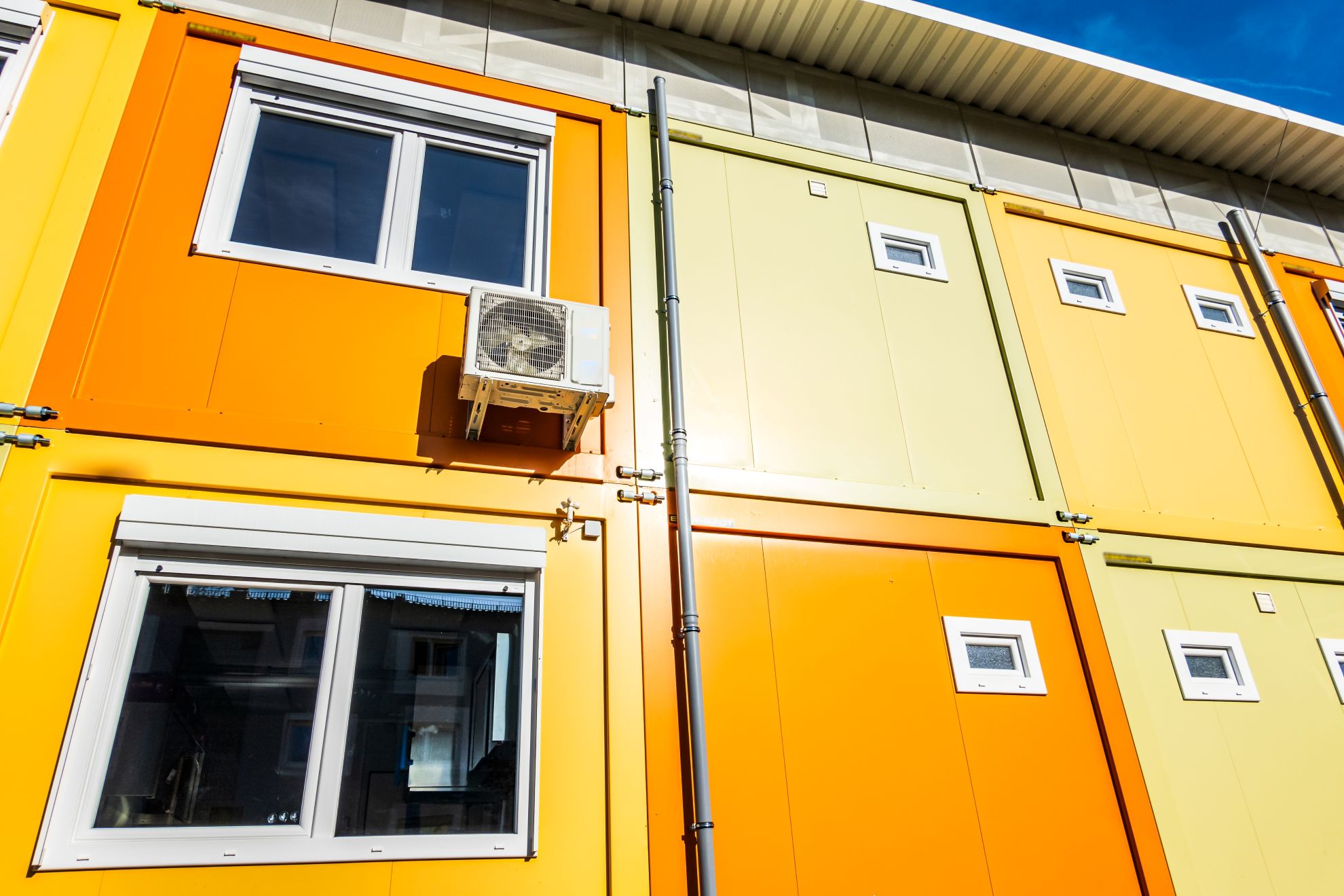
In our recent webinar focused on temporary, or semi-permanent buildings, Dave Wardell (CCO, measurable.energy) and Richard Hipkiss (Energy & Sustainability Director, Elemental & Advisory Board Member, MPBA) laid out a clear roadmap for how these interim spaces can become efficient, resilient and data-driven.
Temporary structures don’t have to mean temporary thinking. Data matters, control matters, and human systems matter.
Here are the lessons and practical steps shared in the webinar.
Visibility from Day One
For temporary buildings, one of the biggest risks is deferred monitoring. The assumption that, because the space is short-term, you don’t need the same level of instrumentation. In fact, that’s exactly when you need it most.
- Many temporary units escape proper sub-metering or device-level monitoring.
- Without early visibility you’re blind to behaviour drift such as heaters or cooling units left running overnight, plug loads left on, and inefficiencies during commissioning.
- A modular site equipped with full monitoring delivered actionable insights within the first week, identifying phantom loads and inefficient scheduling.
Plug-and-Play Doesn’t Mean Plug-and-Forget
Temporary structures often come with the expectation of quick deployment and minimal fuss. However, speed must not compromise control:
- Equipment such as portable heaters, AC units, kiosks and plug loads are often outside the BMS, making them invisible in the control layer.
- In a case example, a kiosk shed next to a construction site consumed as much after hours as during hours because nobody had scheduled or automated its loads.
- Plug-load instrumented sockets, smart scheduling and occupancy-based controls are advocated, even in temporary installations.
Behaviour and Governance: Even a Temporary Building Needs Operations Routines
The temporary building label often leads to less oversight, fewer routines and less training. This undermines savings. Temporary spaces still require governance:
Who’s responsible for checks?
Who monitors after-hours loads?
What’s the reporting cadence?
A weekly energy snapshot was utilised for one temporary site, showing day and night loads, tenant behaviour and alerts. This created a sense of ownership among the site team.
Verification is important. Once the instrumentation is deployed and the loads have been monitored, the savings must be verified to show the impact and to provide feedback to the decision-makers.
Making the Business Case. Temporary Doesn’t Mean Non-Strategic
One misconception is that temporary builds can skip the business-case rigour of permanent facilities. In fact, because they often cost more per square metre due to the modular and pre-fabricated nature, inefficiencies amplify risk. Energy cost volatility and temporary asset equals a higher risk if consumption isn’t managed.
By installing socket-level monitoring and scheduling, one temporary building achieved an ROI in under 18 months, thanks to the elimination of unmanaged weekend loads and idle equipment.
This also tied to carbon and sustainability goals. Even a short-term building contributes to portfolio emissions, so making it efficient as it strengthens ESG credentials.
A Roadmap for Temporary Building Efficiency
- As soon as the building is active, capture load profiles and occupancy patterns.
- Identify unmanaged loads. Particularly after-hours equipment and tenant behaviours.
- Deploy controls and monitoring such as Smart sockets, scheduling software, occupancy sensors and dashboards.
- Engage site teams in weekly reports, alerts, responsibilities and incentives.
- Verify and scale. Show savings and provide results to stakeholder.
- Standardise the roadmap for the next deployment.
Watch the full webinar
Want to find out more? Get in touch today.
